


Our Dredging Applications

Mining Applications


Water is an essential part of a typical mining operation. There are 3 main types of water involved:
Process Water
Seeping Water
Tailings Water
Dredging Solutions solves problems in each of these categories.
Mineral sediments, also known as slimes, accumulate over time in process water ponds.
Cleaning the ponds from the slimes keeps the ponds in operation and prevents costly down-times.
Mining generates enormous amounts of solid waste, “tailings”, in the form of rocks and dirt.
In order to prevent the uncontrolled release of tailings material into the environment, enrichment
plants have a disposal facility, usually a pond. Tailings ponds require regular maintenance to ensure
safe operation of the enrichment plant.
Tailings and drainage ponds may also contain valuable materials that have accumulated there due to
rainfall or outdated processing methods. These materials can be profitably reprocessed with modern
technology.


<
3 - 3
>


SLIMES REMOVAL
> Removing mineral sediments, slimes, from process ponds to keep them from clogging the pumps
and lowering the production rate.
> Slimes removal from rain/groundwater ponds in open pit mines.
RECOVERING VALUABLE MATERIALS
> Pumping coal back to the process from drainage ponds.
> Pumping old tailings back to the process for reprocessing.
> Collecting spilled ore.
TAILING POND MAINTENANCE
Keeping tailings ponds in good condition and maintaining the volume.
> Pumping tailings to final deposit.
> Enforcing tailings pond banks.
> Levelling tailings in tailings ponds.
Work Modes
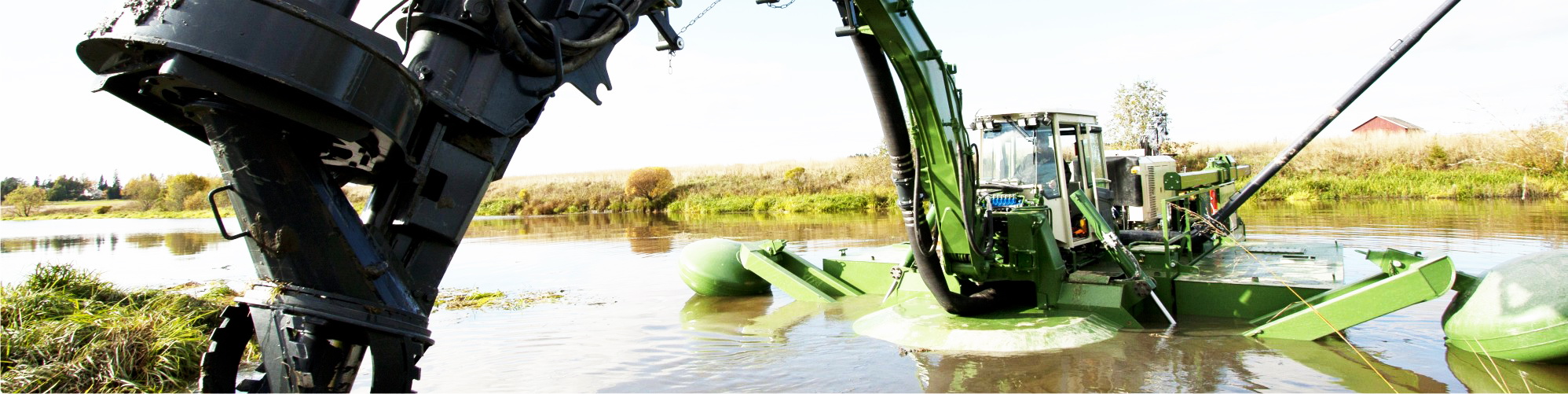
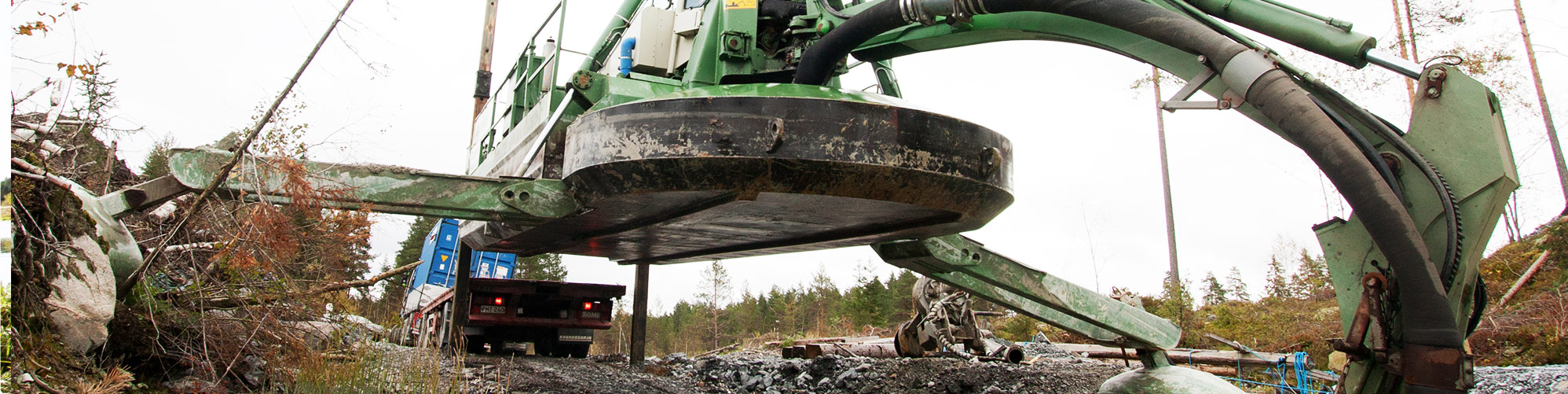
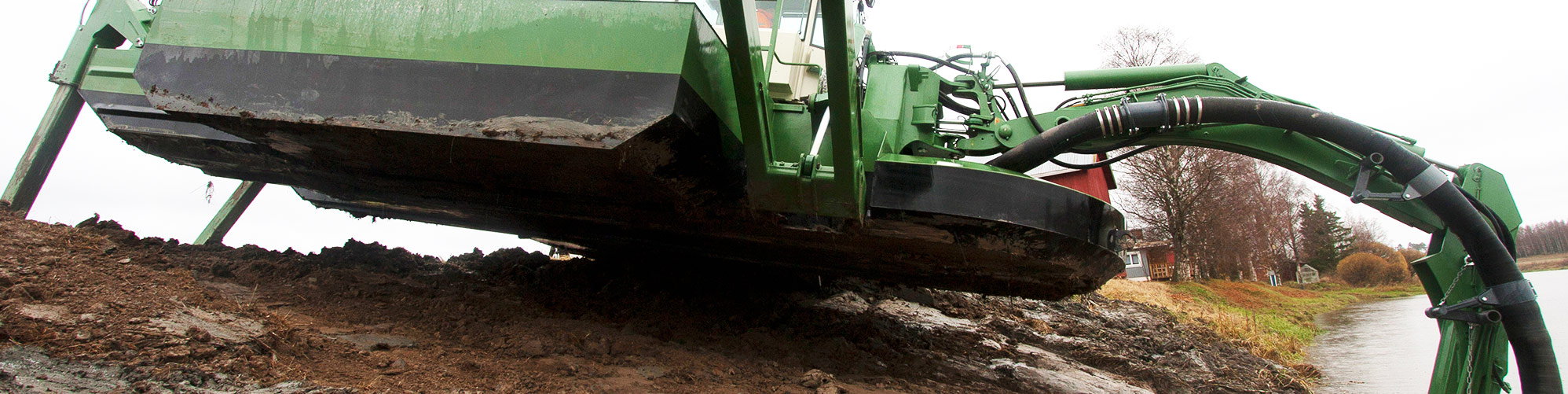
The amphibious multi-purpose Watermaster does suction dredging, backhoe dredging, raking, piling and
has the ability to use also other hydraulic attachments, such as a hydraulic hammer for under water work.
Suction Dredging
> The main suction dredging attachment is the Cutter Pump.
> The most efficient suction dredging depth is 0,8 m – 5,5 m.
> The maximum pumping distance is 1,5 km.
> Indicational pumping capacity of sludge (solid material mixed with water) is around 500 m3/h.
Backhoe Dredging
> Steady independent anchoring with four stabilizers.
> The most efficient backhoe dredging depth is 0 m – 4,5 m.
> The indicational backhoe dredging capacity of solids is 40-60 m3/h, depending on soil type and
backhoe bucket.
> Several attachments available: 600 l bucket with teeth,700 l bucket without teeth, Clam shell bucket.
Raking
> Watermaster's Rake-attachment is a 2,75 m wide tool for removing vegetation (both floating and rooted)
and trash.
Piling
> Two attachments are available for piling work; the Piling bucket(for wooden piles) and the vibrating
piling tool (for both metal sheets and wooden piles).
> Watermaster grabs the piles from the side and can thus handle longer piles.


<
1 - 4
>